
Patio cleaning and restoration in Sussex
A patio spends the winter in the shade, damp for weeks at a time, collecting leaf fall and rainwater run-off. By spring it is green, slippery and several shades darker than the day it was laid. That is not wear and it is rarely permanent staining — it is a living film of algae, moss and lichen sitting on top of perfectly good stone, and a careful clean takes it straight off.
Sam & Son Jet A Drive cleans patios, terraces, steps and garden paths throughout Burgess Hill, Haywards Heath and the wider Sussex area. Patios need a noticeably more considered approach than driveways: the materials are more varied and more delicate, the pointing between slabs is often the weakest part of the whole installation, and there is usually planting, furniture and glazing within a few feet of the work.
We price every patio in person and free of charge, so you know exactly what you are getting, what condition the pointing is in, and what the surface is realistically going to look like when we finish.
Recent patio jet washing jobs in Burgess Hill, Haywards Heath and Sussex
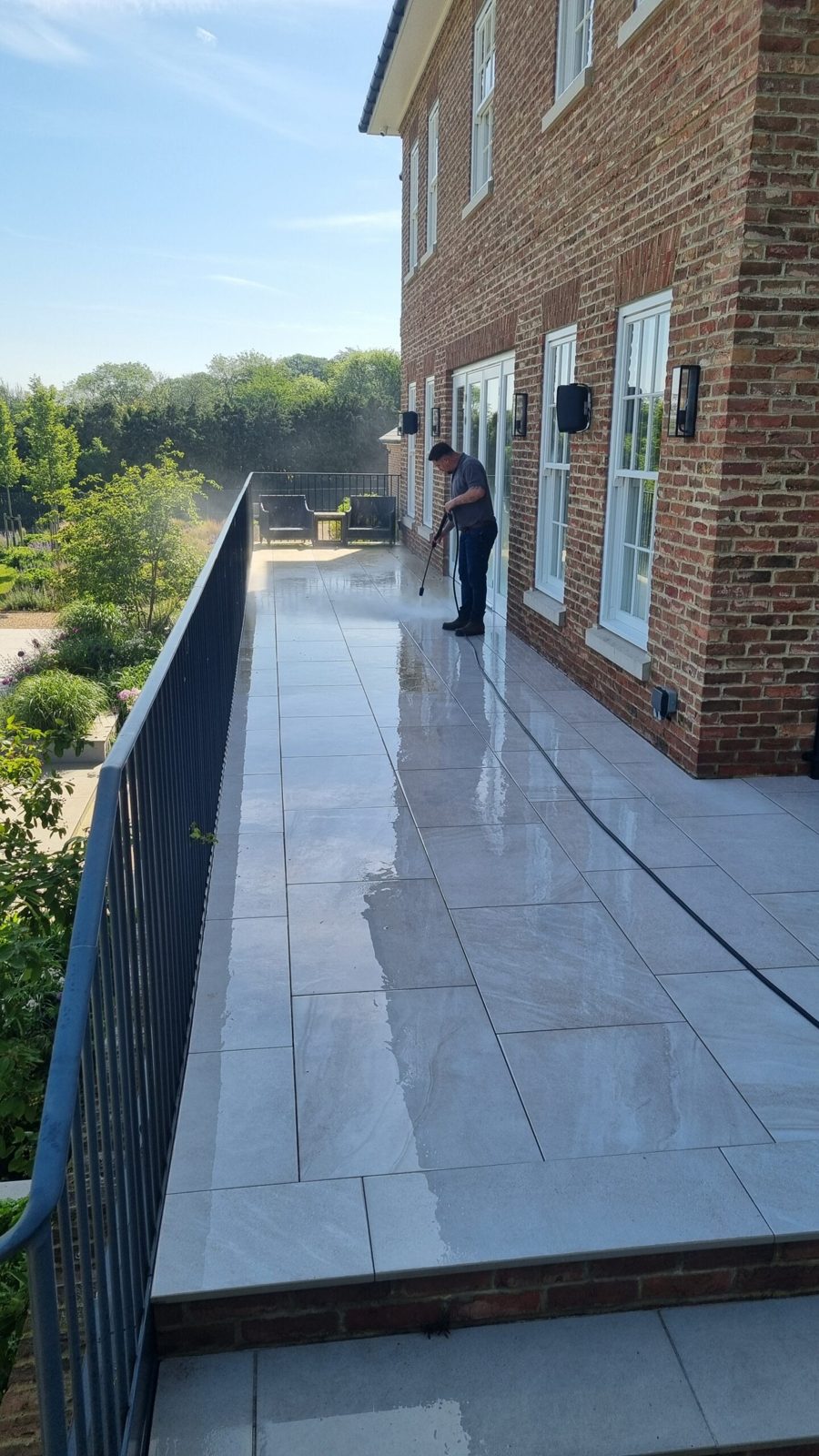
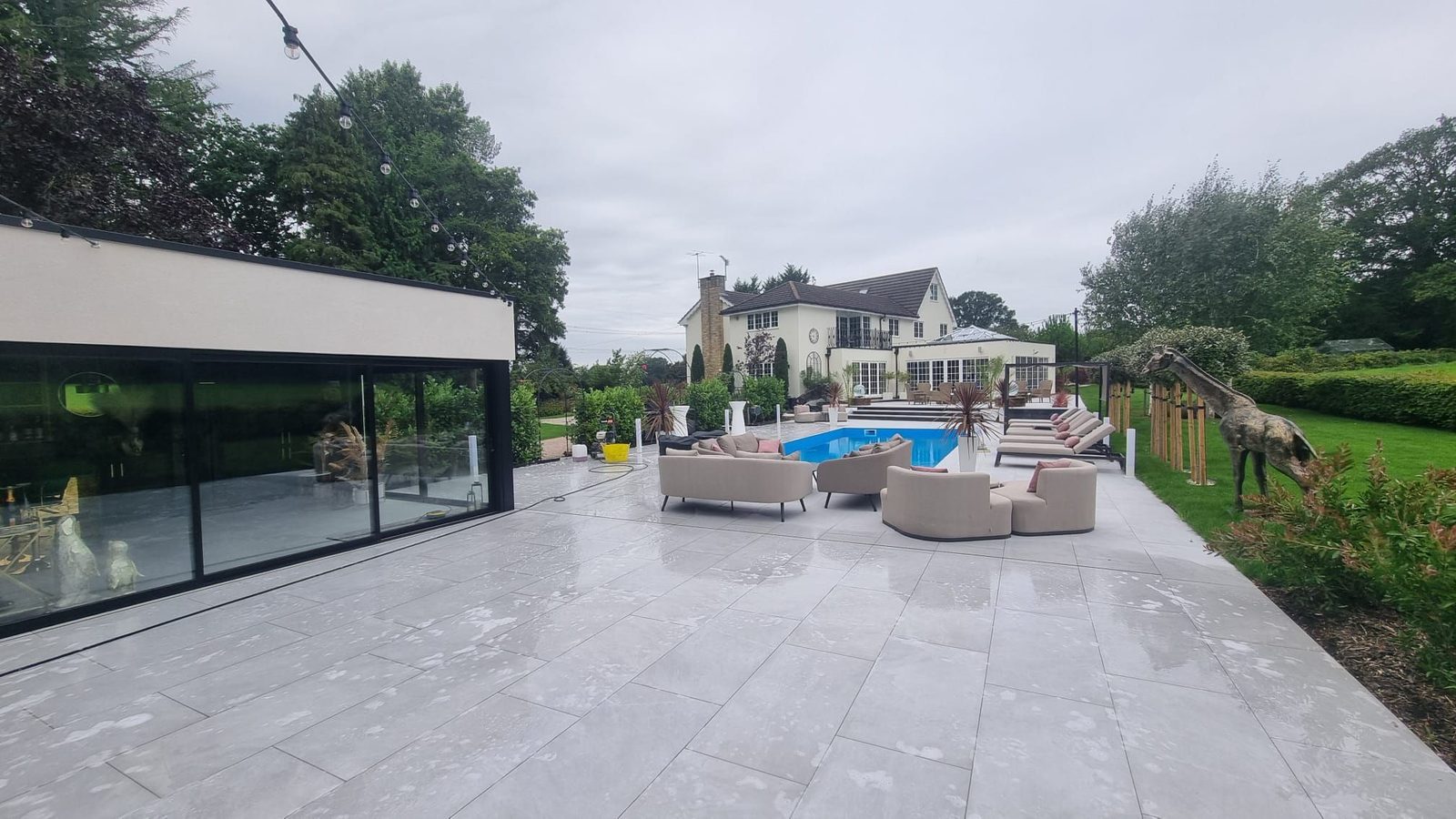
patio/swimmingpool
Porcelain patio cleaning in Haywards Heath We recently spent a productive day in Haywards Heath helping a local homeowner refresh their outdoor living space,…
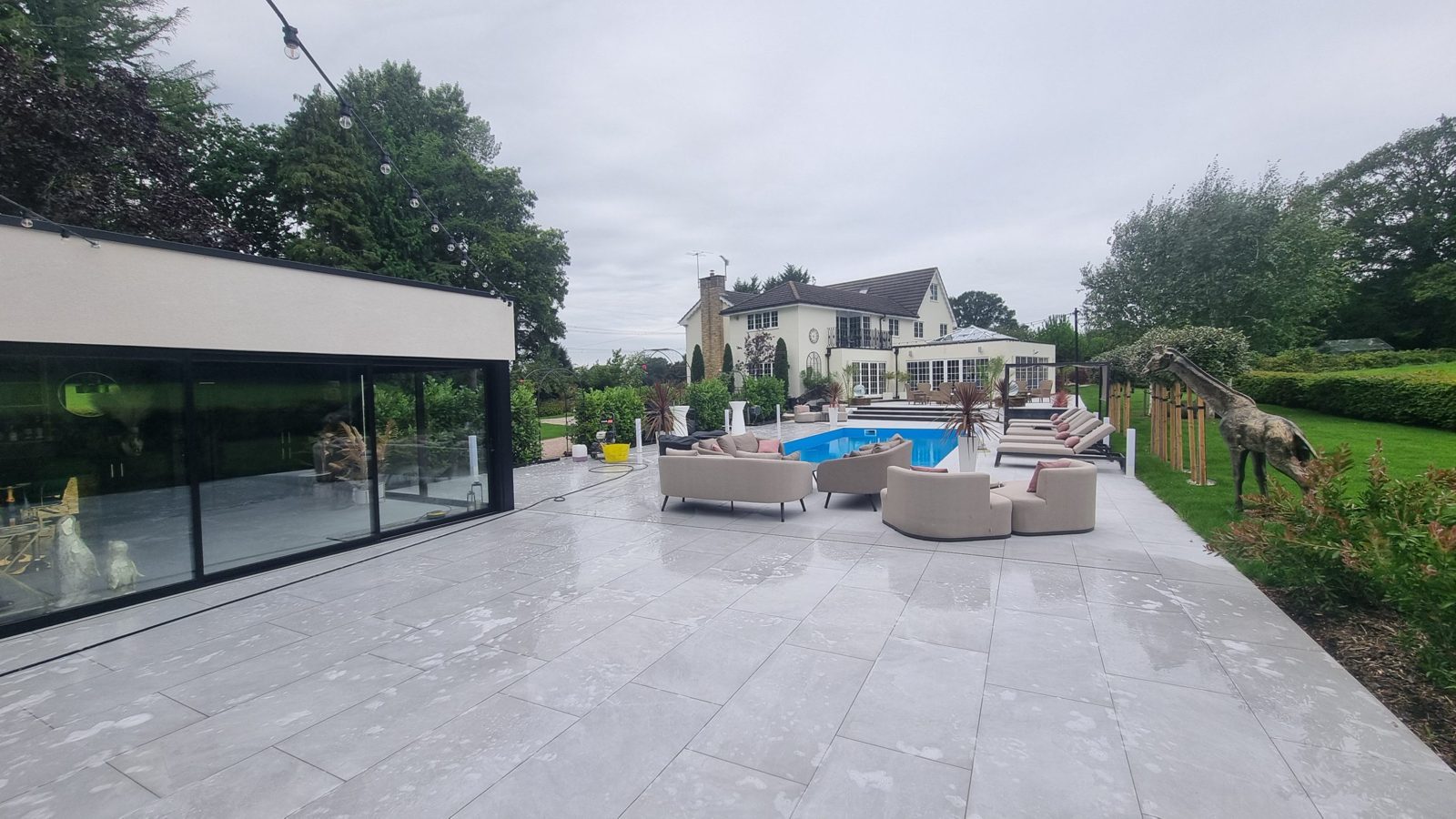
patio Cleaning
Returning to a familiar Burgess Hill garden We were pleased to return to a familiar address in Burgess Hill this week to help a returning customer with a full…
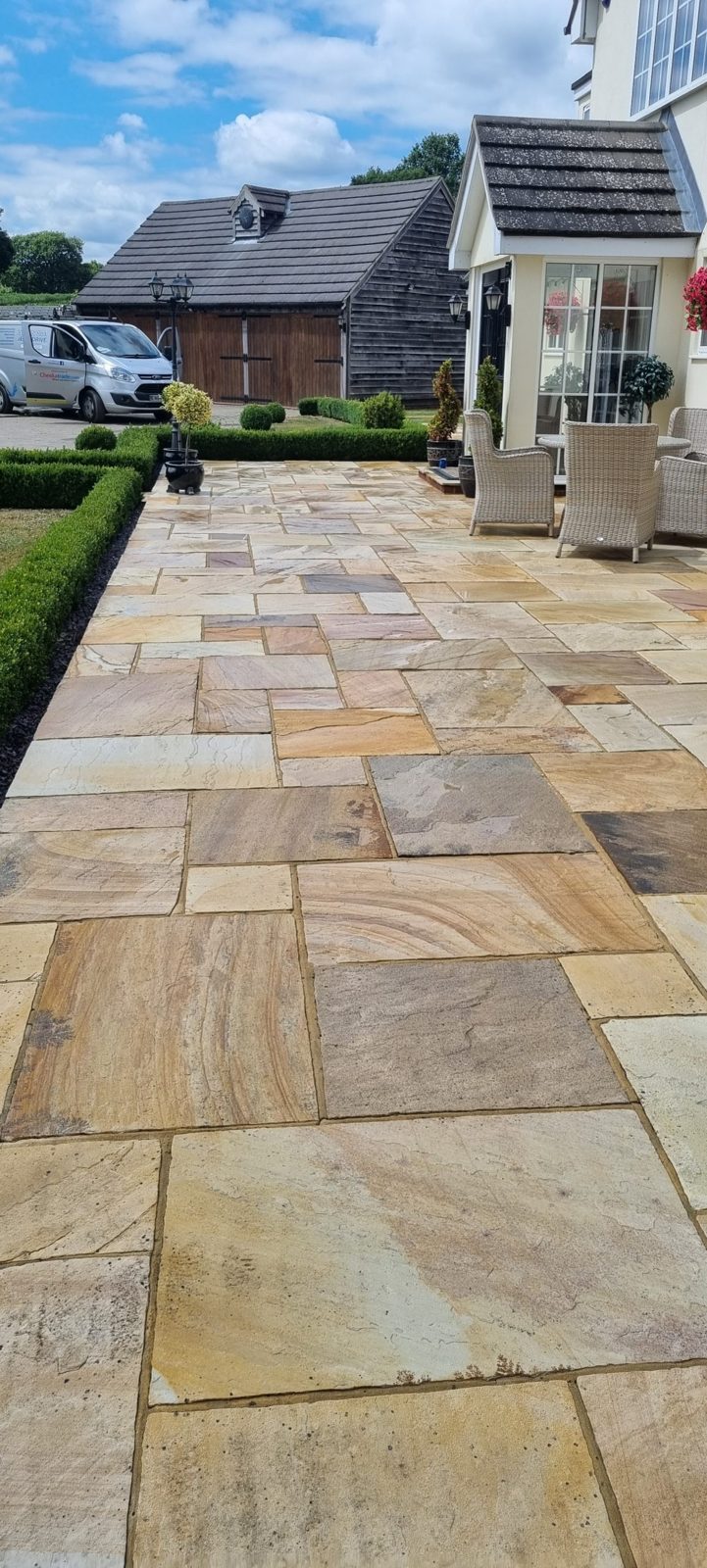
Patio clean
Patio cleaning in Burgess Hill We were recently called out to a residential property in Burgess Hill to address a large rear patio that had certainly seen…
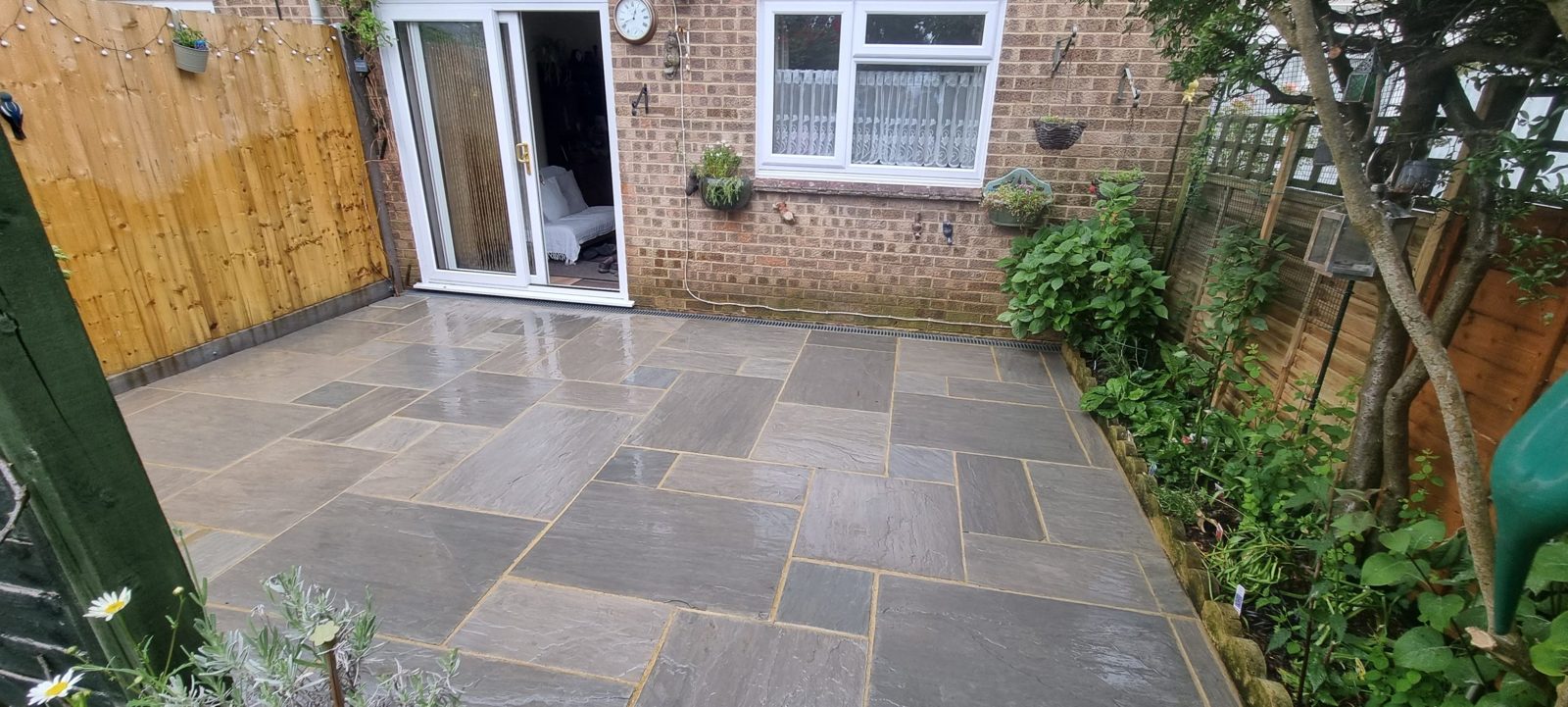
Patio cleaning in Burgess Hill
Patio cleaning in Burgess Hill We recently headed out to a residential property in Burgess Hill to help a homeowner whose patio had certainly seen better days.…
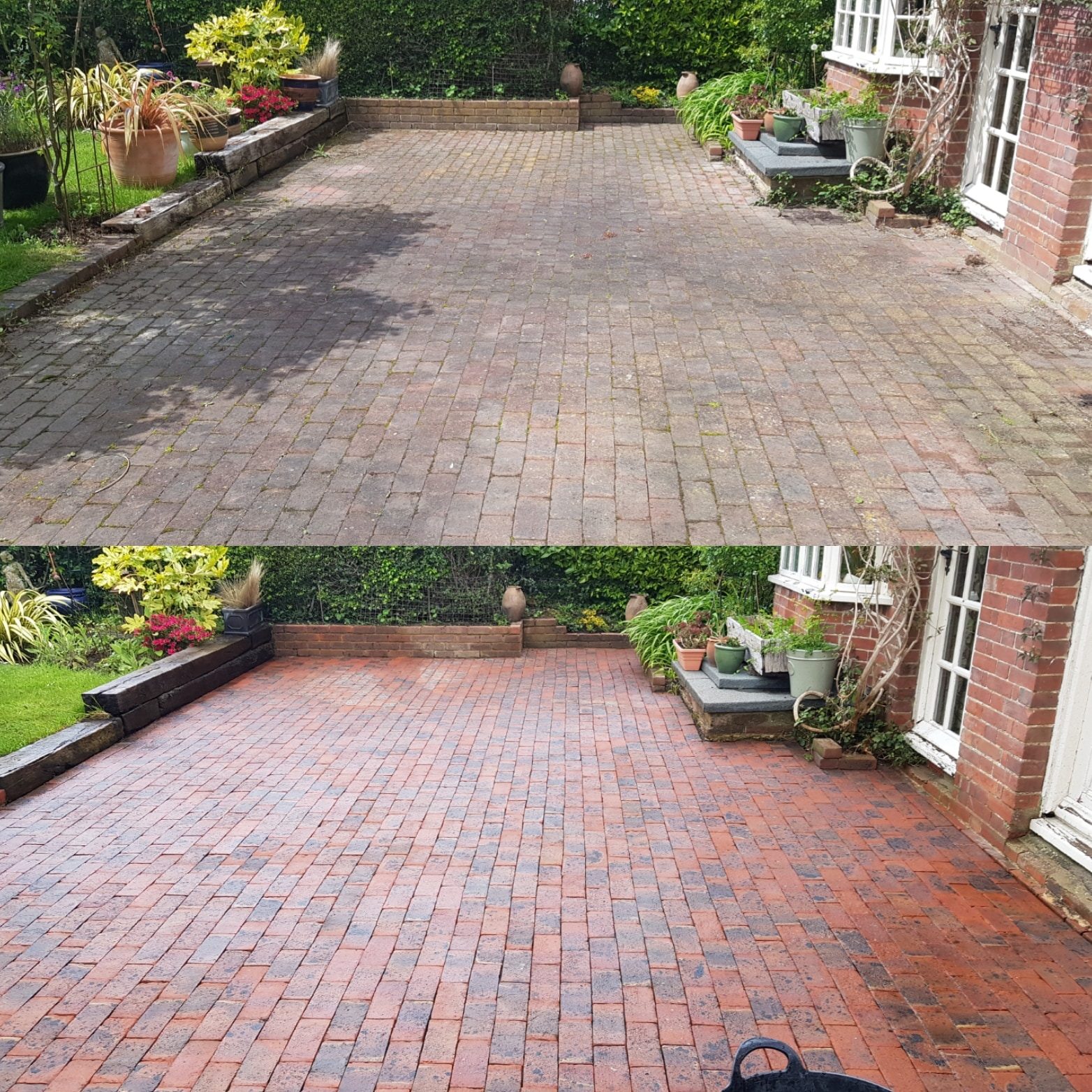
Block paving patio cleaned and treated in Chailey
Annual patio maintenance in Chailey We recently returned to a lovely property in Chailey to carry out the annual maintenance of a large block paving patio.…
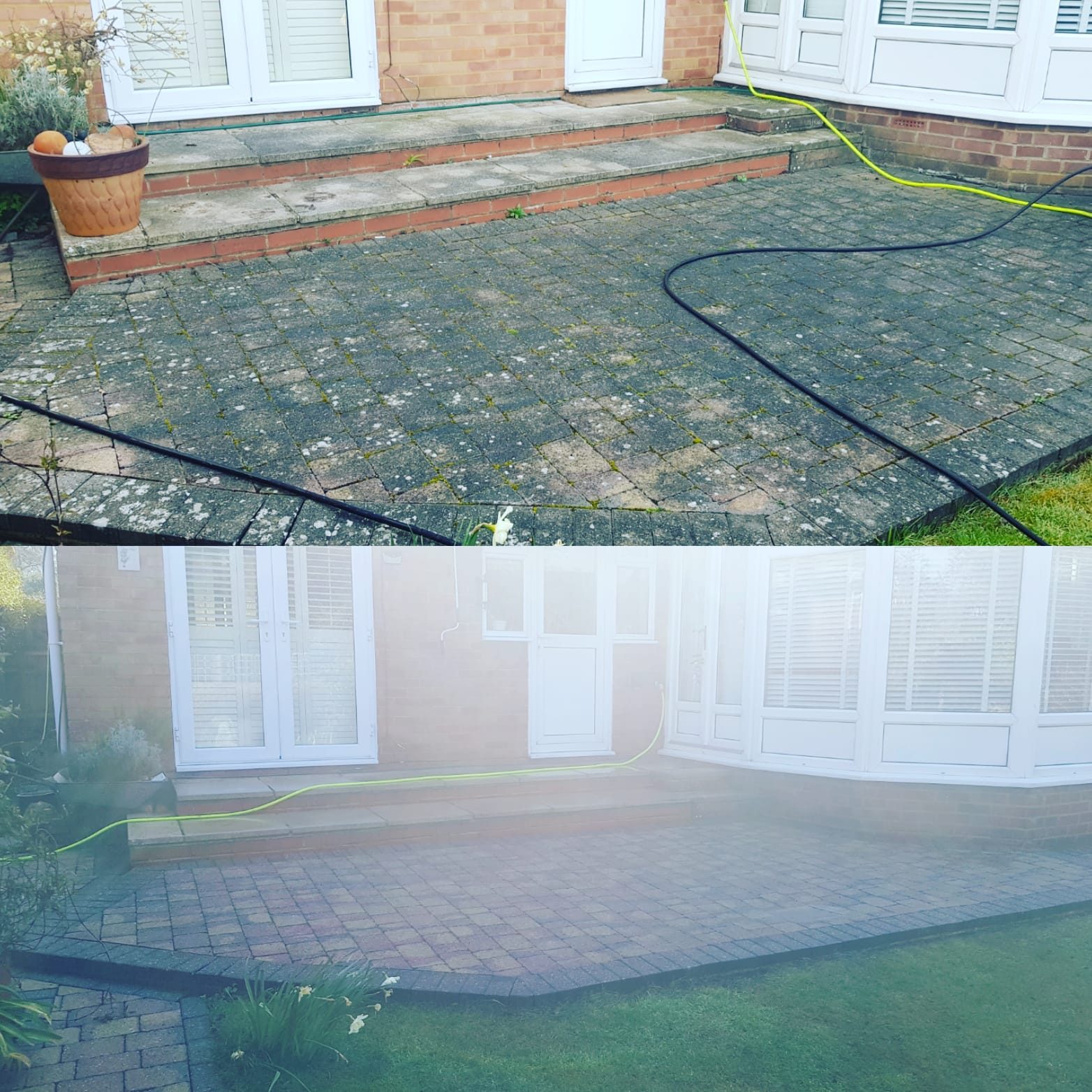
Driveway cleaned and sealed to restore kerb appeal in Sussex
A weathered driveway across Sussex We recently travelled across Sussex to assist a homeowner who felt their driveway had lost its kerb appeal. Over several…
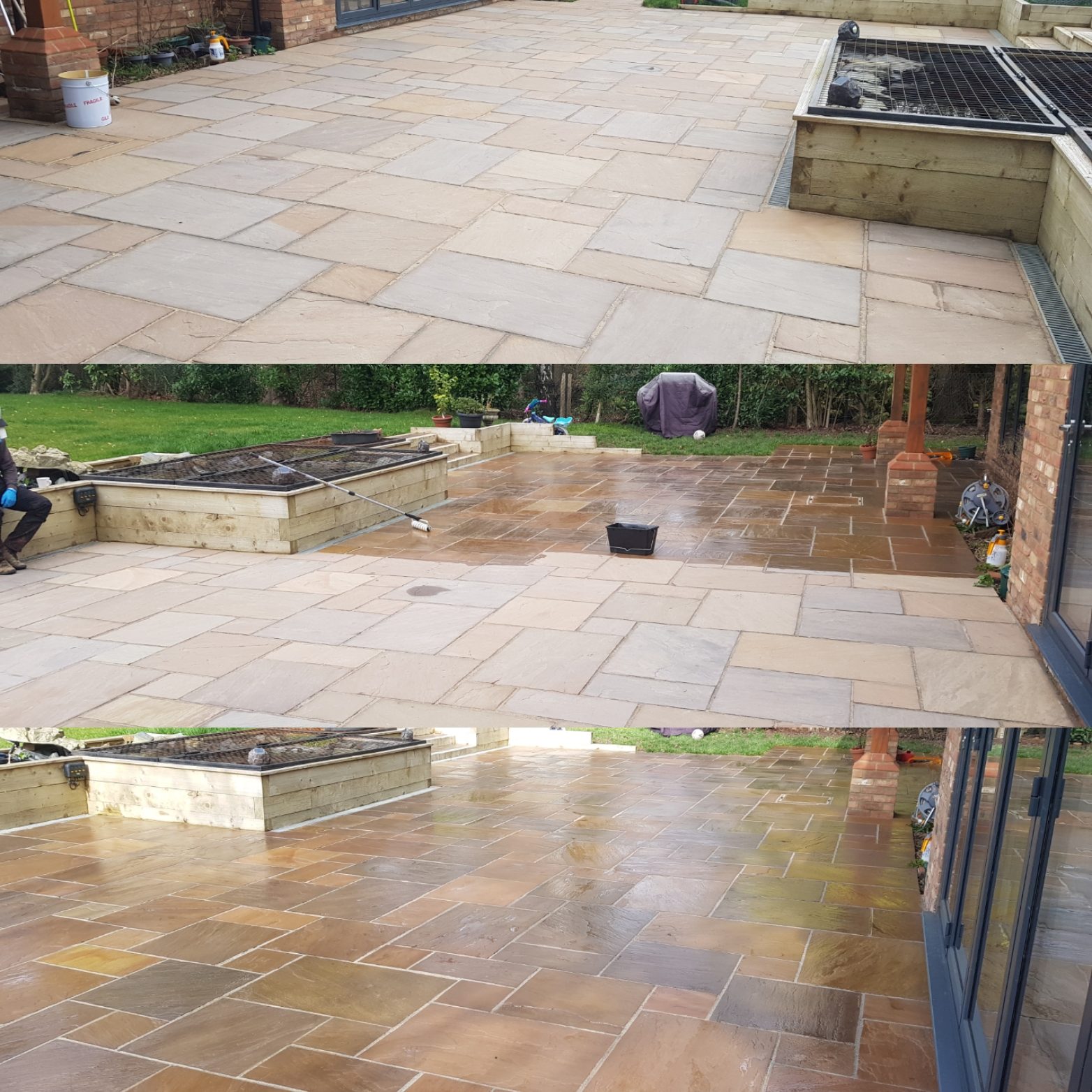
Patio cleaning and resealing
Restoring a stone patio in Sussex We recently visited a beautiful property in the heart of Sussex to assist a homeowner whose large stone patio had lost its…
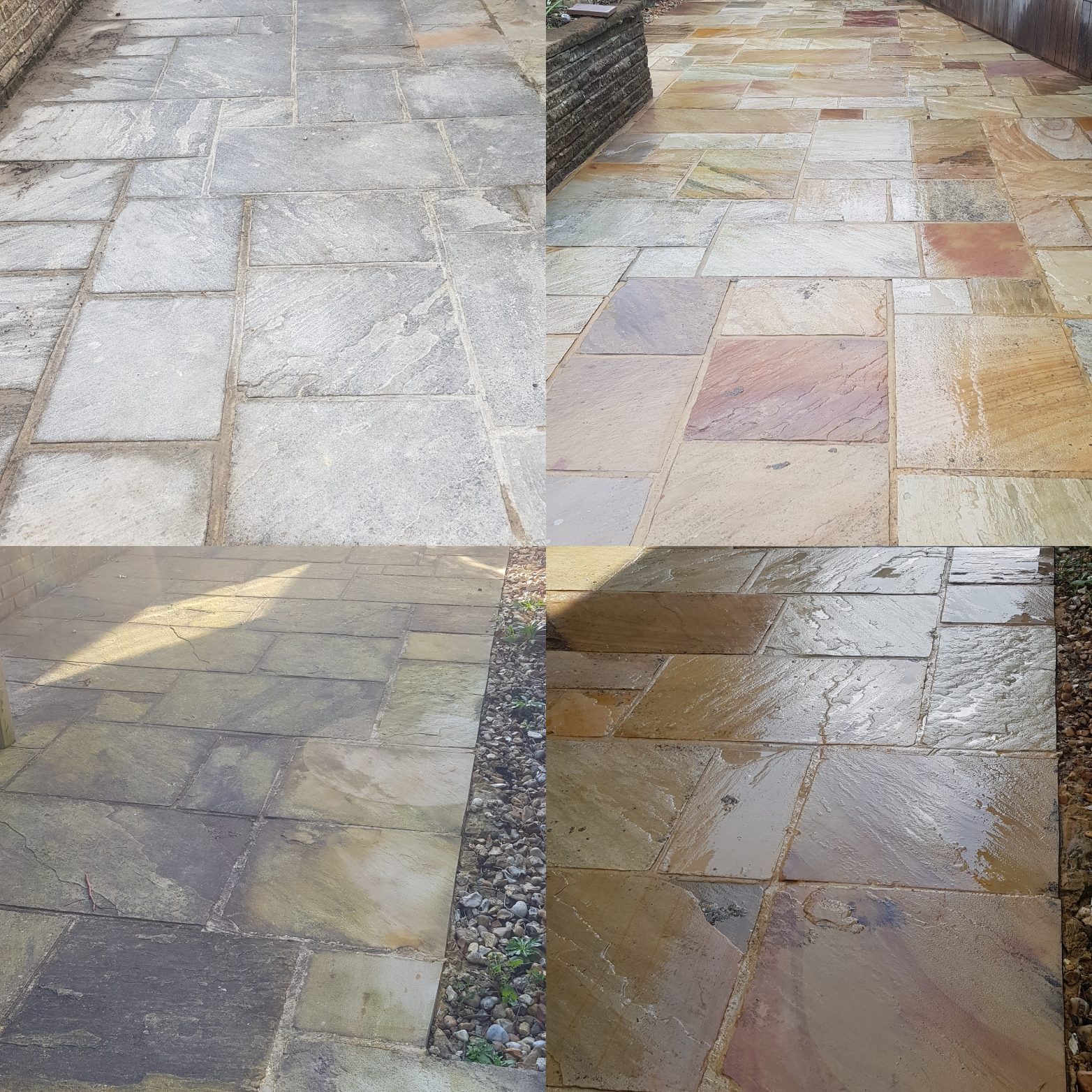
Patio cleaning
Patio cleaning in Sussex We were recently called out to a property in the heart of Sussex to help a homeowner whose patio had become a real safety concern over…
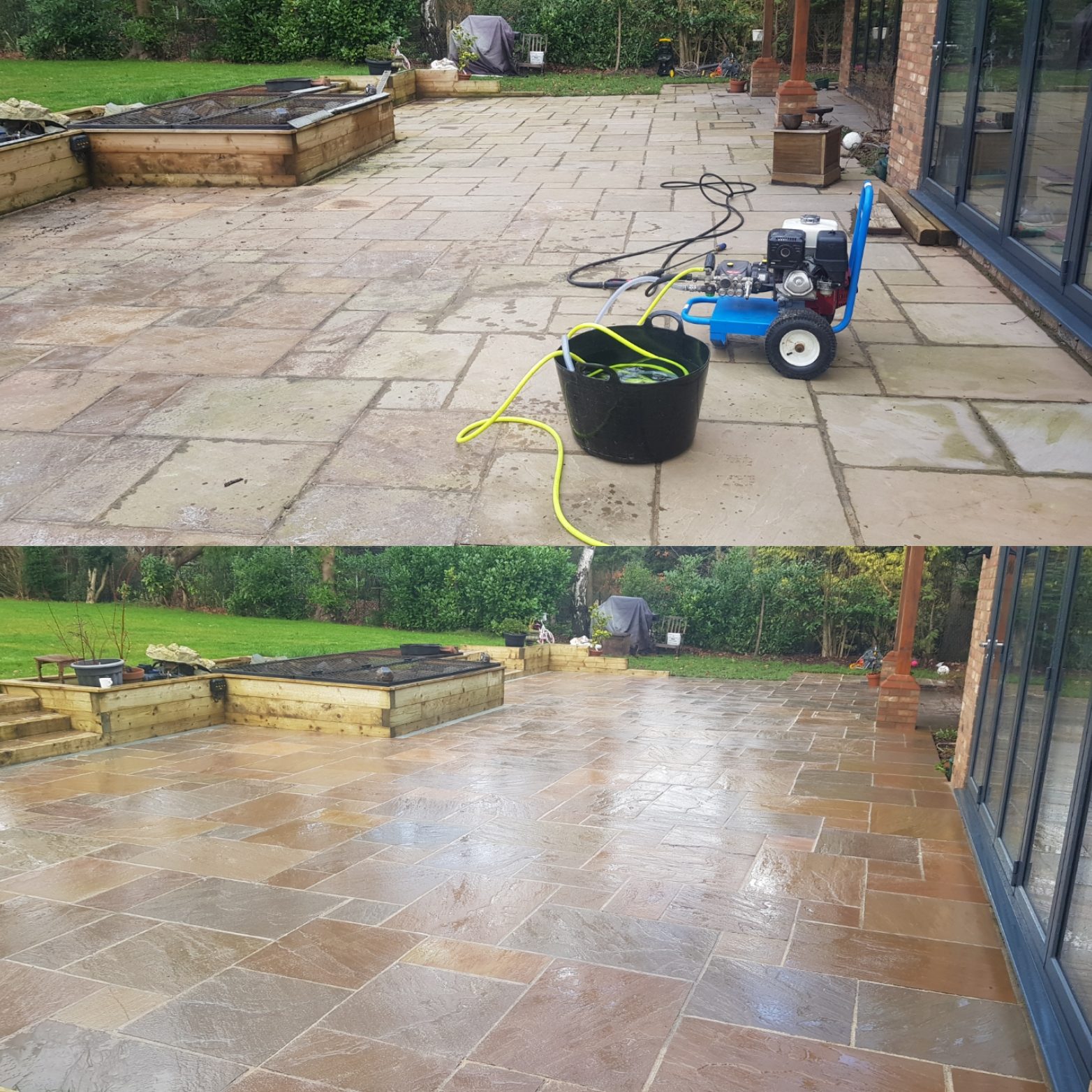
Patio cleaned easy joined with mushroom colour and sealant
Patio restoration at a Sussex home We recently visited a lovely property in Sussex to assist a homeowner whose patio had begun to lose its lustre due to the…
How we clean and restore a patio, step by step
1. Assessment
We identify the paving material, test a small area, check the state of the pointing and note anything loose, cracked or hollow before a machine is switched on.
2. Protection and pre-treatment
Planting, furniture, doors and glazing are covered or moved. Algae, moss and lichen get a biocidal pre-spray and dwell time so growth is killed at the root, not just knocked off.
3. Controlled cleaning
A rotary surface cleaner gives an even finish across the field of the patio, with hand lance work along edges, steps, risers and around planting at reduced pressure.
4. Pointing and finishing
Washed-out joints are re-pointed or re-filled with the appropriate jointing compound, a residual treatment is applied, and the surrounding area is rinsed and swept.
Matched to your paving, not a one-size-fits-all blast
Indian sandstone, limestone, riven concrete slabs, porcelain, York stone, granite setts and old crazy paving all behave differently under a pressure washer. Sandstone is soft enough to be scoured if the lance is held too close. Limestone marks easily with acidic products. Porcelain barely needs pressure at all, but it does need the right detergent to shift the greasy film that dulls it. Old concrete slabs with an exposed aggregate face will shed loose stone whatever you do, and that needs pointing out in advance rather than explaining afterwards.
We regularly clean:
- Indian sandstone and other imported natural stone
- Limestone, travertine and York stone paving
- Porcelain and vitrified paving
- Riven, textured and smooth concrete slabs
- Granite setts, cobbles and stone edging
- Crazy paving, brick paviours and clay pavers
- Steps, risers, thresholds and garden paths
Black spot, rust and the honest limits
Black spot lichen is the single most misunderstood problem on a patio. Those small, flat, tar-like dots are a living organism rooted into the surface pores of the stone, and no sensible amount of water pressure will remove them — you would erode the slab before you removed the spot. They need a specific chemical treatment, applied and left to work, and on badly affected patios a second application some weeks later.
Rust staining from garden furniture, iron pyrites naturally present in some sandstone, tannin staining from leaves and oil from a barbecue all behave similarly: they respond to the correct targeted product rather than more pressure. We will always tell you what we expect to shift completely, what we expect to lighten significantly, and what is likely to be permanent, before you commit to the work.
Efflorescence — that white, chalky bloom that appears on new paving — is a separate matter again. It is mineral salt migrating out of the bedding as the installation dries, and it typically continues to appear for the first year or two. Cleaning it off works, but it can return, and no honest cleaner will promise otherwise.
Pointing, jointing and what happens after we leave
The pointing between slabs is what keeps water out of the bedding and stops weeds germinating in the gaps. On many patios it has already partly failed before we arrive, and washing simply reveals how little was holding it together. We will identify that at the quotation stage and, where the job calls for it, re-point with a suitable mortar or fill the joints with a modern brush-in jointing compound to leave the patio watertight and stable.
Once the surface is clean and the joints are sound, an impregnating sealant is a sensible investment on porous stone. It slows the absorption of water, wine, grease and leaf tannin, keeps the surface easier to sweep and mop, and can be supplied natural or colour-enhancing to give the stone that just-rained richness. Sealing requires the paving to be thoroughly dry, so it is usually carried out on a return visit rather than the same afternoon.
Between professional cleans, the simplest thing that helps is drainage and light. Keeping gutters clear so they are not discharging over the patio, cutting back overhanging growth to let sun and air reach the slabs, and sweeping leaves off in autumn rather than letting them rot in place will meaningfully extend how long the finish lasts.
Careful in your garden
A patio clean happens in the middle of somebody's garden, which is why we work the way we do. Borders and lawn edges are covered, planting close to the work is rinsed with clean water afterwards, run-off is directed away from beds and ponds where possible, and everything we move gets put back. Water and dirt get swept off paths and steps before we go rather than left to dry into a grey film.
We are local to Burgess Hill and Haywards Heath, fully insured, and the overwhelming majority of our patio work comes from neighbours recommending us to each other. That is exactly the standard we want to be held to.