
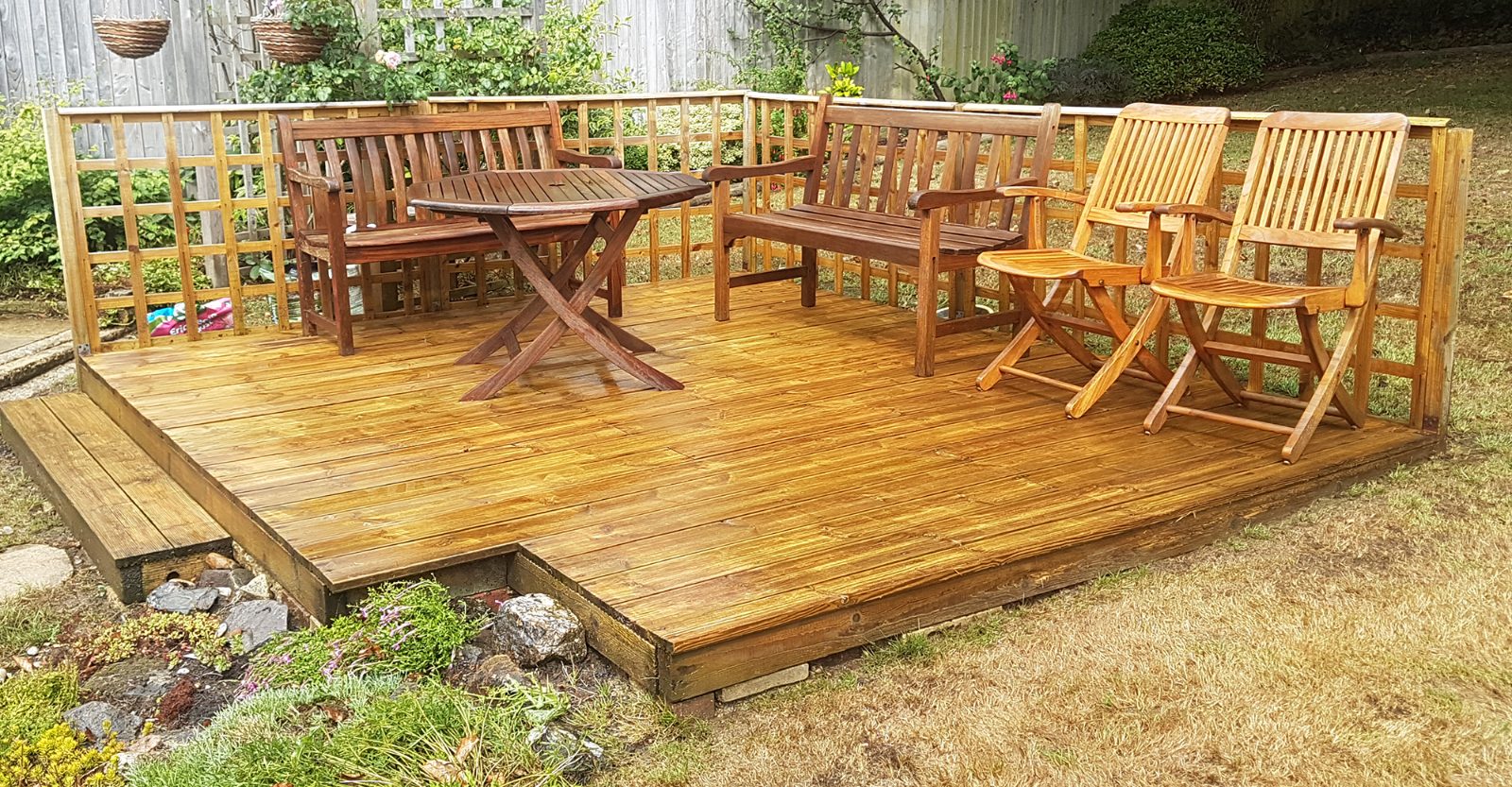
Decking jet washing done safely
Timber decking is the surface people are most nervous about having pressure washed, and with good reason. Wood is soft, it has a grain that opens up when it is attacked too hard, and a careless operator with a narrow nozzle can leave permanent furry tramlines across every single board in an afternoon. Done properly, though, decking is one of the most rewarding things we clean — going from black-green and lethal to warm honey timber happens in an afternoon and the difference is obvious from the street.
Sam & Son Jet A Drive cleans and restores decking throughout Burgess Hill, Haywards Heath and the wider Sussex area. The whole approach is different from a driveway: lower pressure, a wider fan, more standoff distance, movement worked along the grain rather than across it, and the right cleaner doing most of the actual work rather than brute force.
As with everything we do, the quotation is free and given in person, so we can look at the state of the boards, the fixings and the frame before quoting rather than guessing.
Recent decking jet washing jobs in Burgess Hill, Haywards Heath and Sussex
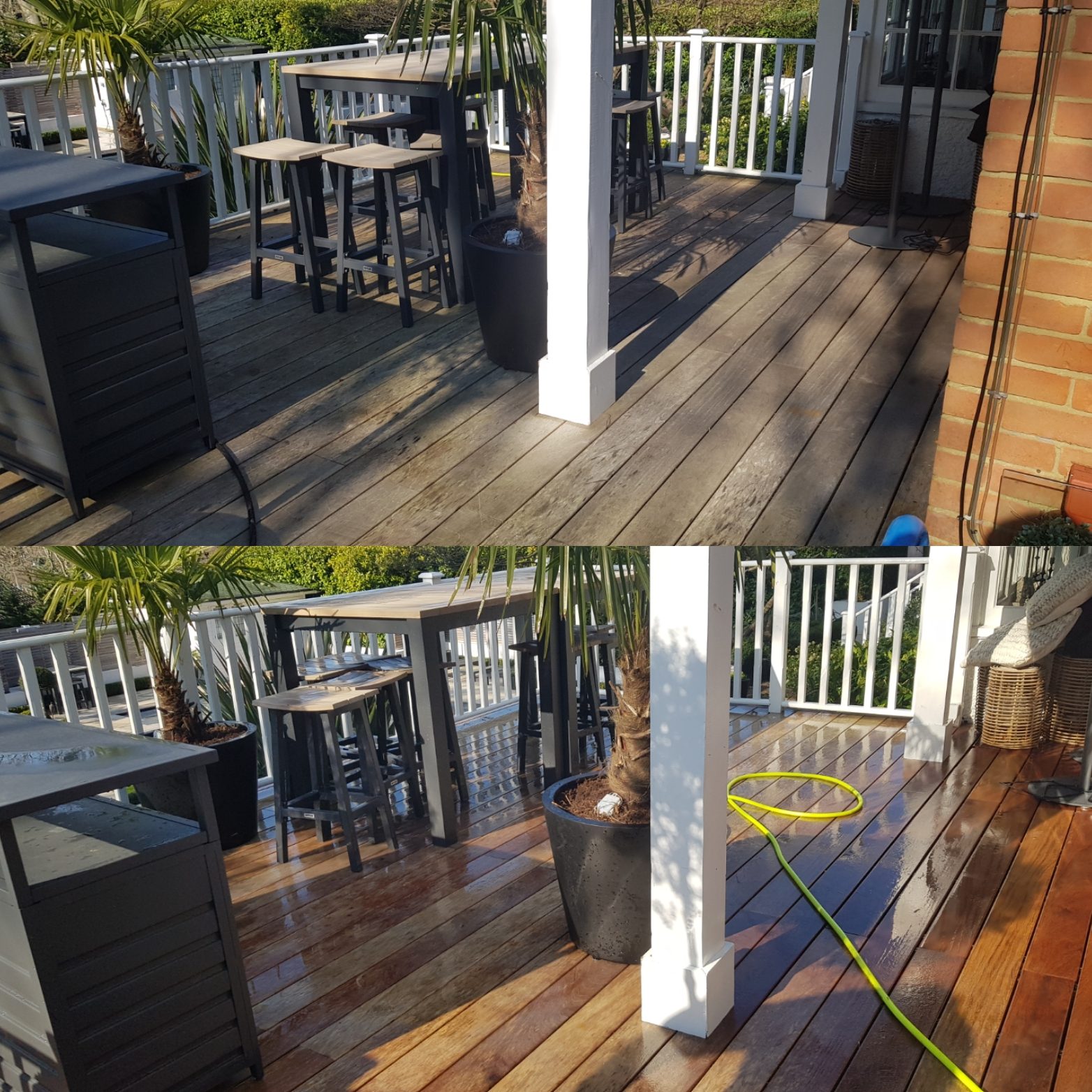
Decking cleaning in Haywards Heath
Decking jet washing in Haywards Heath We recently visited a home in Haywards Heath to take on a large timber decking area that had become a real safety concern.…
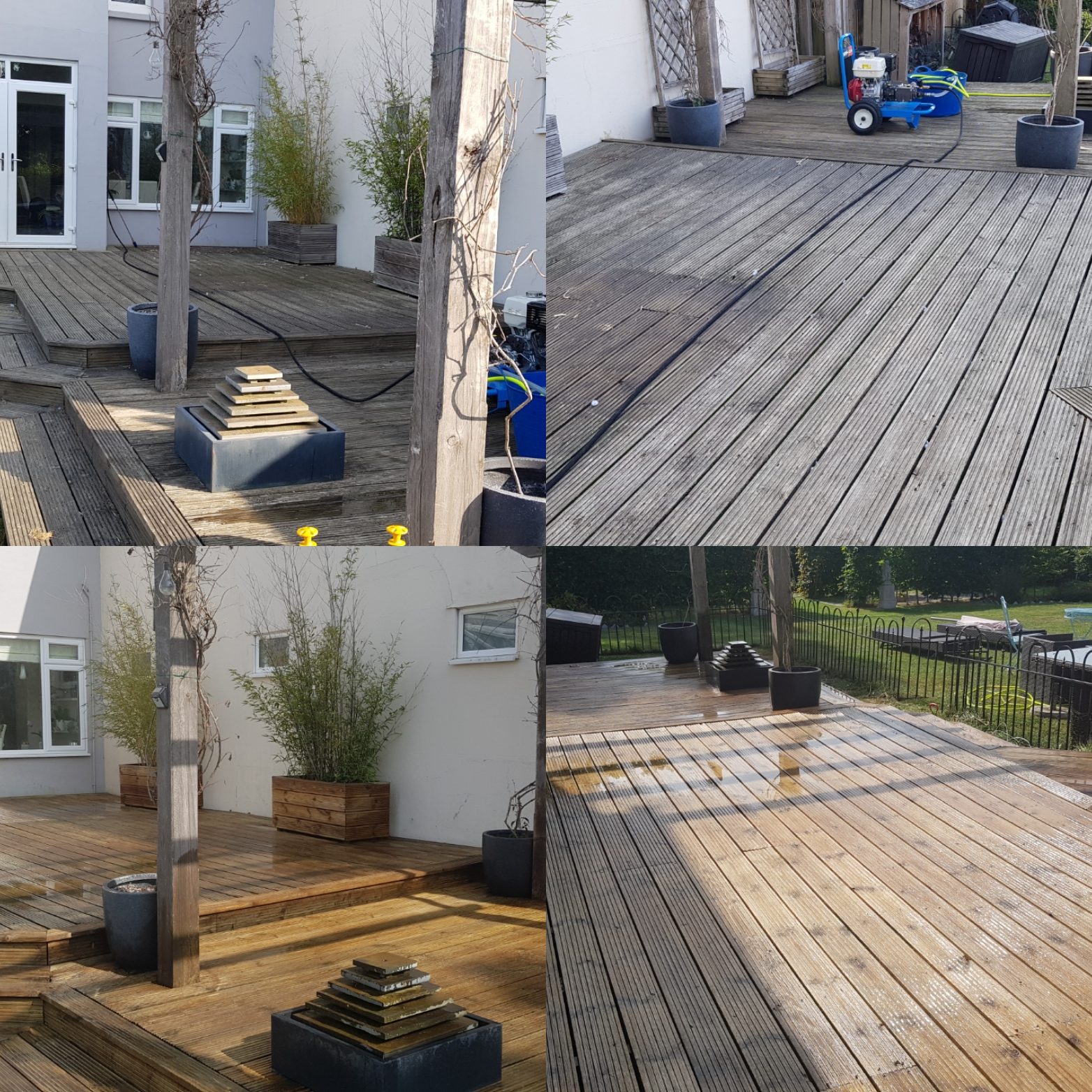
Decking cleaning and oiled days job Burgess Hill Park Road
Decking jet washing on Park Road We were recently called out to a residential property on Park Road in Burgess Hill to attend to a large expanse of timber…
How we clean timber and composite decking safely
1. Inspection
We check the boards for splits, cupping, rot and protruding fixings, and look underneath at the joists and posts wherever access allows, so nothing gets worse under pressure.
2. Clear and pre-treat
Furniture, pots and barbecues are moved, debris is swept out of the board gaps, and a wood-safe algae and mould treatment is applied and left to do the hard work.
3. Gentle wash
The deck is washed at reduced pressure with a wide fan, worked along the grain board by board so the finish is even and the timber surface is left intact.
4. Dry, treat and reassemble
Gaps between boards are flushed clear, the deck is left to dry properly, and a decking oil or protective treatment can be applied on a return visit before everything is put back.
Why decking gets slippery in the first place
The green film on decking is algae, and its favourite conditions are shade, moisture and still air — exactly what you get on a raised timber deck in a Sussex winter. Water sits in the grooves of grooved boards, leaf litter builds up in the gaps and holds moisture against the timber, and within a season or two the surface becomes genuinely dangerous, particularly on steps.
Getting rid of the film mechanically works for a few weeks. Killing it works for a season or more, which is why we always pre-treat with a biocidal cleaner and let it dwell rather than relying on water pressure. Improving the drainage matters too: clearing the gaps between the boards so rainwater can actually fall through, and cutting back anything overhanging that is keeping the deck permanently damp.
Grooved boards are worth a specific mention. Those grooves were originally sold as anti-slip but in practice they trap grit, water and organic matter, and they need individual attention with the lance rather than a single pass. If your deck is laid groove-side up and constantly slippery, flipping the boards over to the smooth face during a future refurbishment often solves the problem for good.
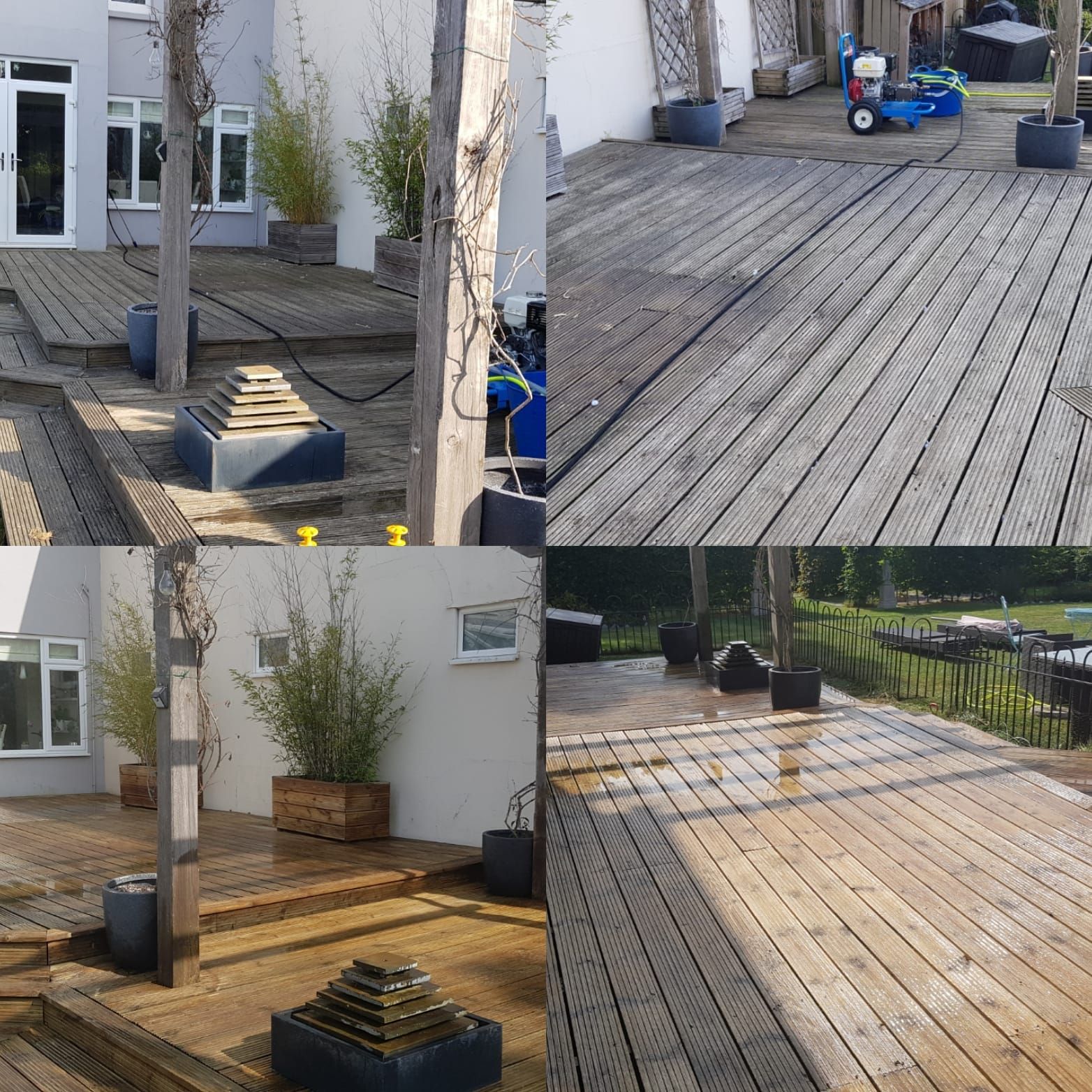
Softwood, hardwood and composite
Pressure-treated softwood — the standard tanalised decking on most British gardens — is the softest and most easily damaged. It gets the lowest pressure, the widest fan and the most patience, especially where boards are old enough to have started to weather and fur.
Hardwood decking such as balau, ipe or oak is far denser and tolerates more, but it also shows any scouring more obviously because of its finer grain, and it will grey off in UV light regardless of how clean it is. Restoring the colour on hardwood is a matter of oiling after cleaning, not cleaning harder.
Composite decking should never be attacked with high pressure at all. The surface layer is what gives it its colour and texture, and once that is broken up it stays broken. Composite is cleaned with a specific detergent, a soft brush and low pressure, which removes the greasy film and embedded grime that make composite look tired without touching the finish.
- Pressure-treated softwood decking, smooth or grooved
- Balau, ipe, oak and other hardwood decks
- Composite and capped composite boards
- Decking steps, handrails, spindles and balustrades
- Timber garden paths, bridges and boardwalks
Oiling, staining and looking after it afterwards
Cleaning opens the timber up; treating it is what keeps the result. Once a softwood or hardwood deck is clean and thoroughly dry — normally at least a couple of dry days later — a decking oil feeds the wood, slows water absorption and holds the colour far longer than bare timber ever will. Oil is generally a better choice than film-forming stains and varnishes on a walked-on surface, because it wears rather than peels and can be topped up without stripping.
We are happy to quote for cleaning alone, or for cleaning plus an oil or protective treatment as a two-visit package. If a deck has previously been coated with something that is now flaking, we will tell you plainly whether it can be worked with or whether it needs stripping back first.
Between visits, the useful habits are simple: sweep the gaps clear in autumn, do not leave rugs, mats or planters sitting directly on the boards through winter, and keep gutters and downpipes from discharging onto the deck. Those three things alone make a very noticeable difference to how quickly the green comes back.
Repairs we spot while we are there
Because we inspect before cleaning, we often find things owners had not noticed: a board that has gone soft at one end, a joist with rot where it meets a wall, a nail that has lifted, a post base holding water. None of that is caused by the wash, but it is much better found now than by somebody's foot next summer.
We will point it all out, replace individual boards or refix fixings where it is a small job, and be honest when a deck has reached the end of its life rather than take money for cleaning something that needs rebuilding. That approach is why our decking work in Burgess Hill, Haywards Heath and the surrounding villages comes almost entirely from recommendations.